
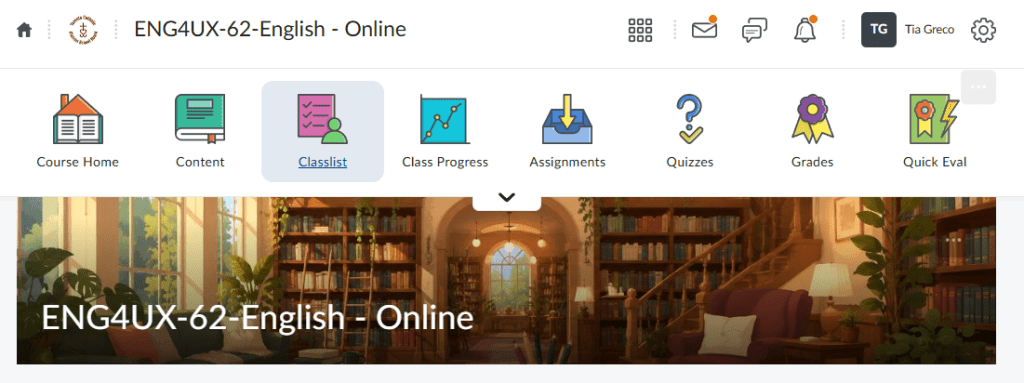
Teaching online requires more than transferring classroom instruction to a digital platform. My eLearning practice focuses on creating clear, supportive, and engaging learning environments where students can navigate their learning independently while still feeling connected to their teacher and classmates.
During my Grade 12 University English eLearning course, I designed and facilitated an accelerated, asynchronous learning experience that combined literary analysis, discussion, independent reading, creative resources, assessment, and ongoing student support.
Designing a Digital Classroom
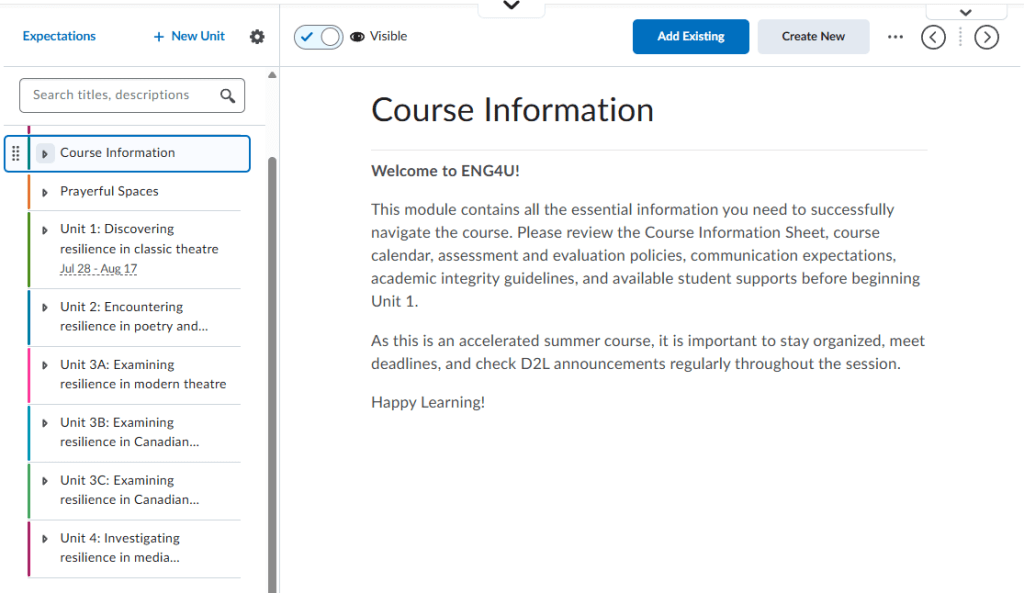
A well-designed online course needs to make expectations visible. I organized the course into clearly structured units, assignments, resources, announcements, calendars, and student supports so that learners could understand not only what they were expected to complete, but why each task mattered.
Making an Online Classroom Feel Human
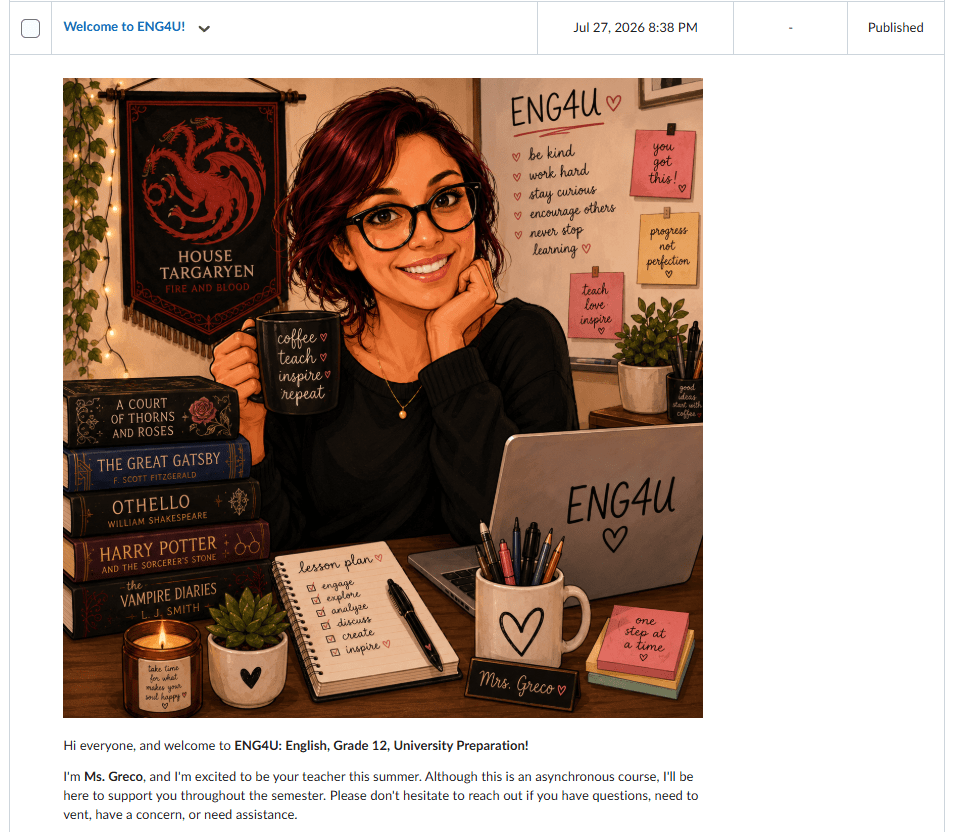
One of the challenges of asynchronous learning is creating a sense of connection. I intentionally built opportunities for students to communicate, ask questions, seek clarification, and get to know one another. My role was not simply to post assignments, but to remain present and accessible throughout the learning process.
Building Community Beyond the Classroom
I designed informal discussion spaces to help students connect through shared interests and create community within an asynchronous environment. The Book Bestie Café invited students to introduce themselves, share reading interests, and find common ground with their classmates.

Making Learning Visible
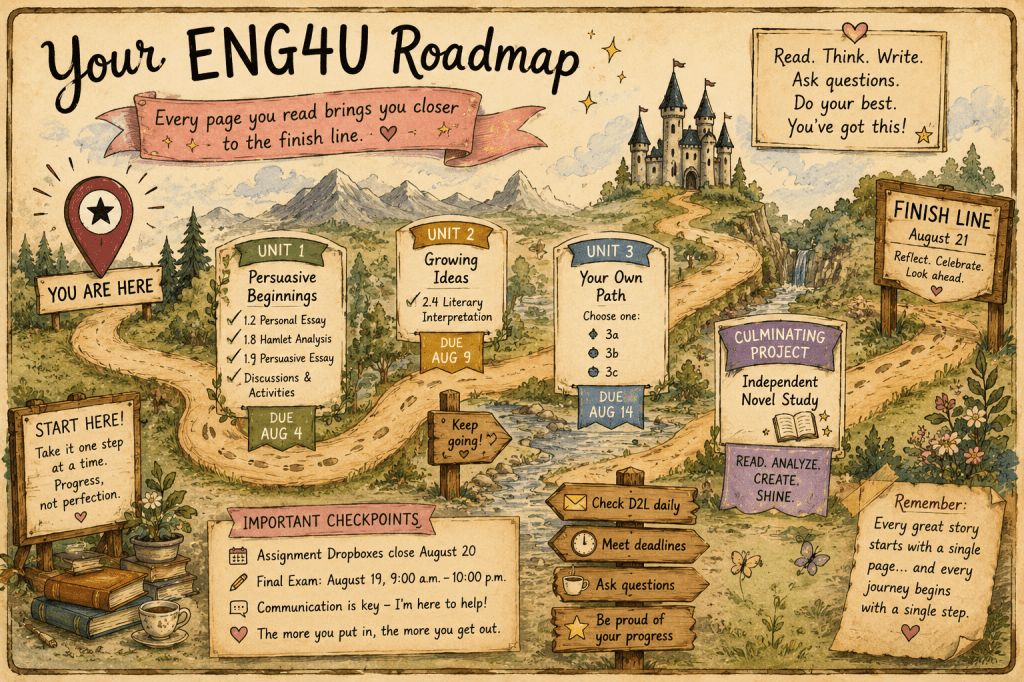
Digital learning can easily become a list of deadlines. I used visual resources to help students see the larger journey of the course and understand how individual assignments connected to broader learning goals.
The ENG4U Roadmap transformed the course sequence into a visual journey, helping students identify where they were, what was coming next, and which milestones mattered most.
Supporting Students in an Asynchronous Environment
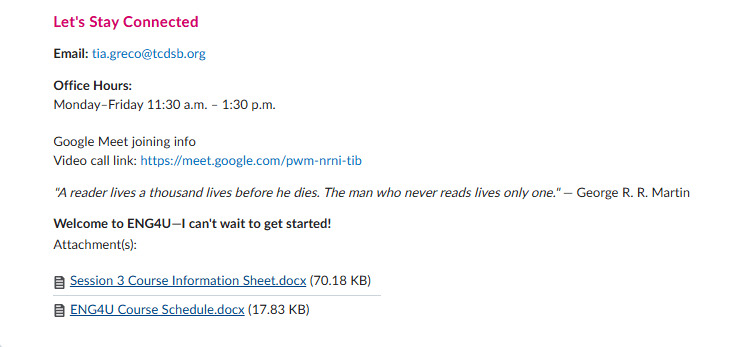
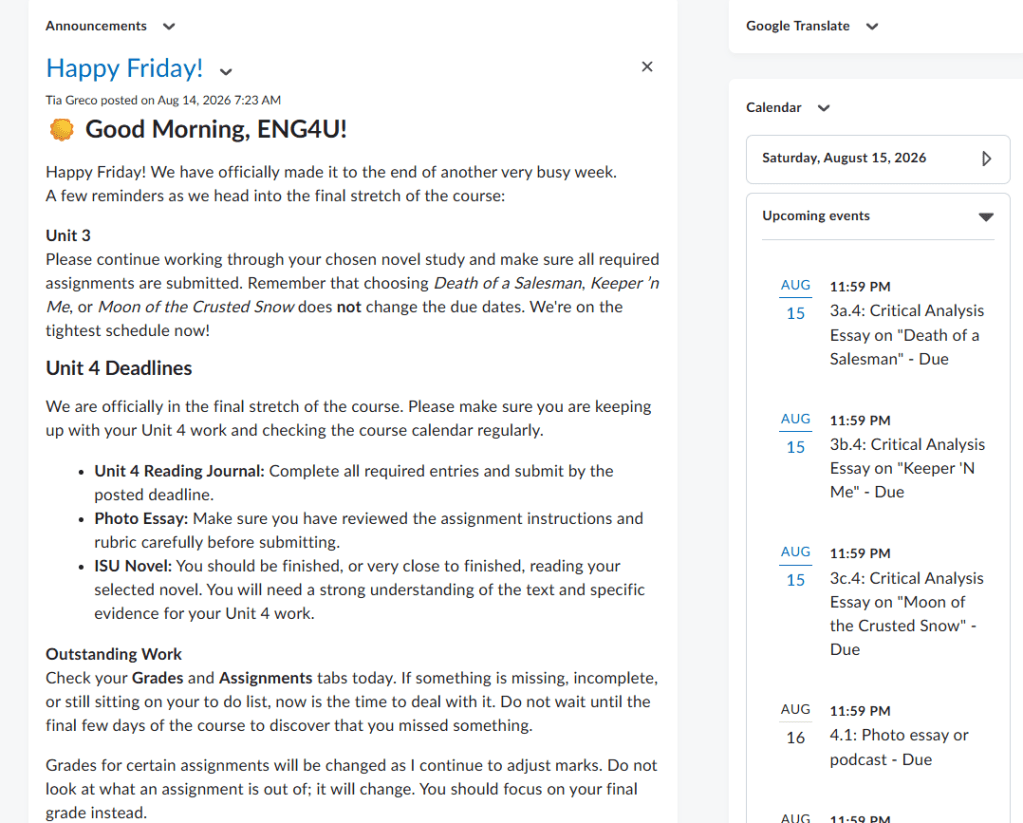
Asynchronous learning requires students to manage their time and navigate course expectations with increasing independence. I supported students through consistent announcements, office hours, email communication, assignment clarification, course calendars, and opportunities to ask questions throughout the learning process.
My goal was to provide enough structure for students to work independently while ensuring that support remained accessible when they needed it.
Creating Space for the Whole Learner
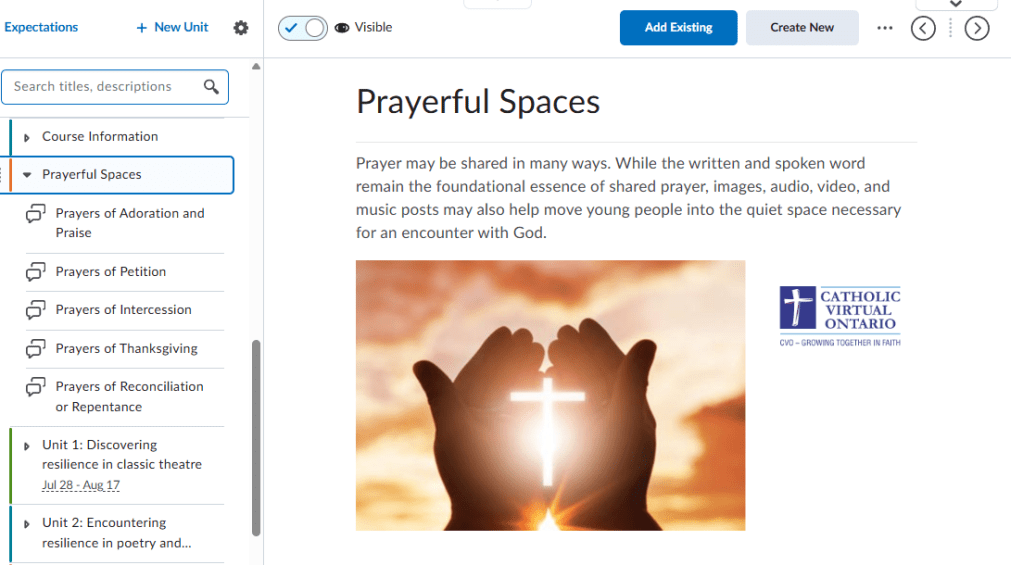
As an educator in a Catholic learning environment, I also recognize that learning extends beyond academic achievement. I incorporated opportunities for reflection, prayer, community, and personal connection throughout the course.
Building an Academic Toolkit
I created and curated resources that students could use beyond a single assignment. Rather than providing instructions only when a task was due, I developed reusable academic tools supporting MLA formatting, literary analysis, critical lenses, essay organization, comparison, and research skills.
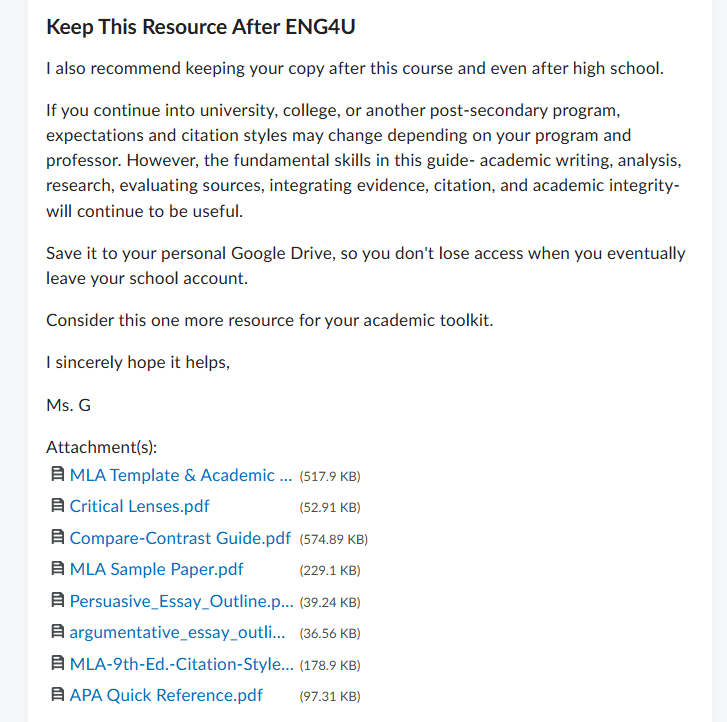
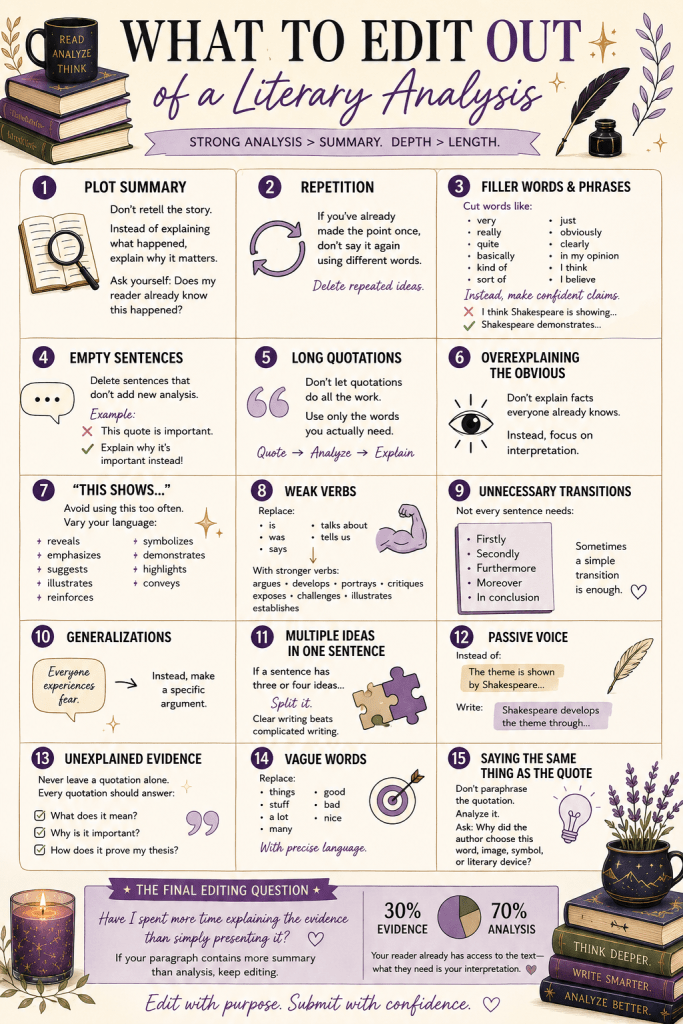
These resources were designed to remain useful beyond a single assignment, giving students reusable strategies for academic reading, writing, analysis, and research.
Assessment, Feedback & Student Support
My approach to online assessment emphasizes clarity, communication, descriptive feedback, and opportunities for improvement. Students received clear expectations, assessment criteria, feedback, and opportunities to ask questions or seek clarification throughout the course.
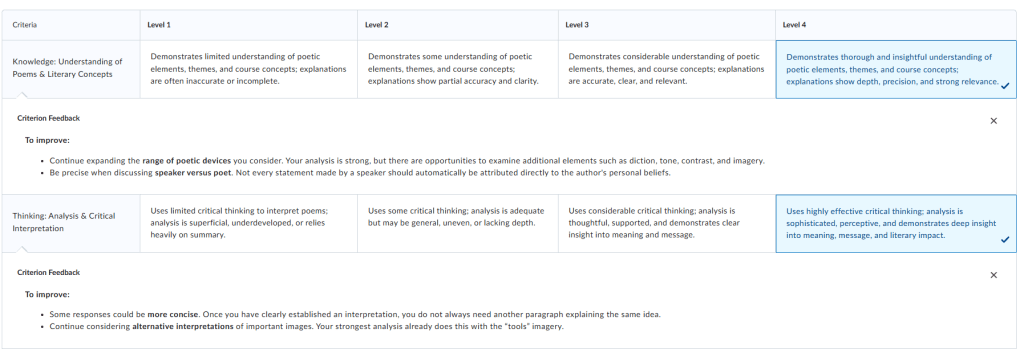
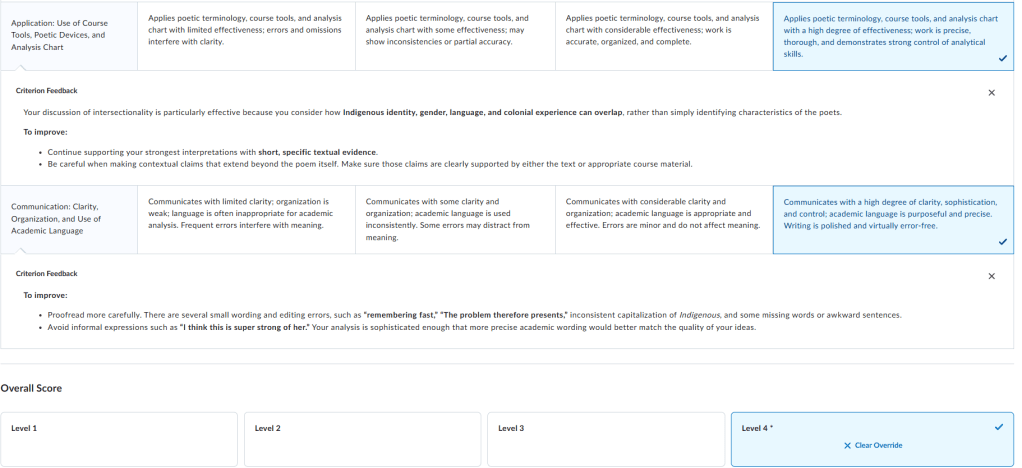
I use detailed assessment criteria to make learning expectations transparent. Students are able to see what achievement looks like across the four categories of the Ontario achievement chart: Knowledge and Understanding, Thinking, Communication, and Application.
Rather than simply receiving a level, students receive feedback explaining their strengths and specific areas for continued development.
Making Expectations Visible
Descriptive Feedback & Feed Forward
My feedback is designed to be actionable. Rather than simply identifying weaknesses, I explain what students are doing successfully, why their work demonstrates a particular level of achievement, and what they can do next to strengthen their work.
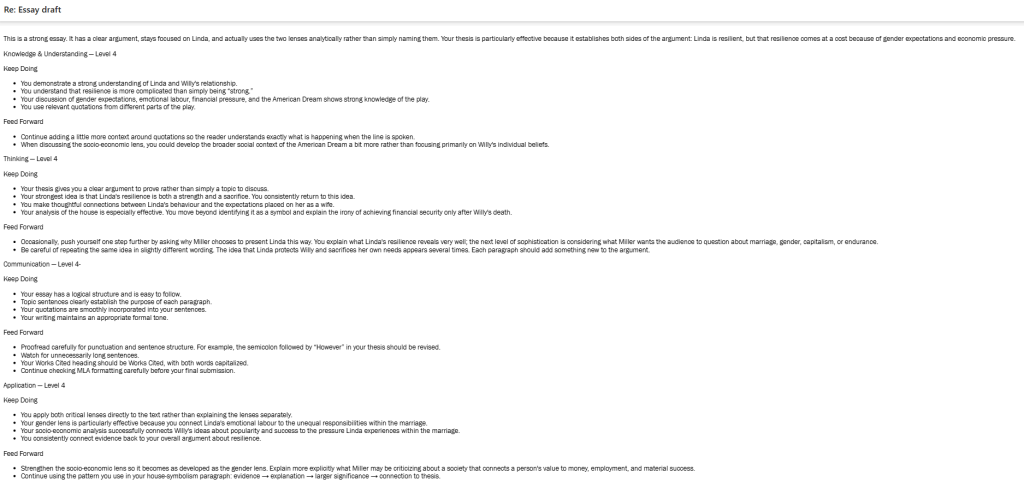
Curriculum-Aligned Assessment
My assessment practices are grounded in the Ontario curriculum. Feedback is connected directly to the skills and expectations students are developing, allowing students to understand how their work demonstrates achievement and what they can do to strengthen it.
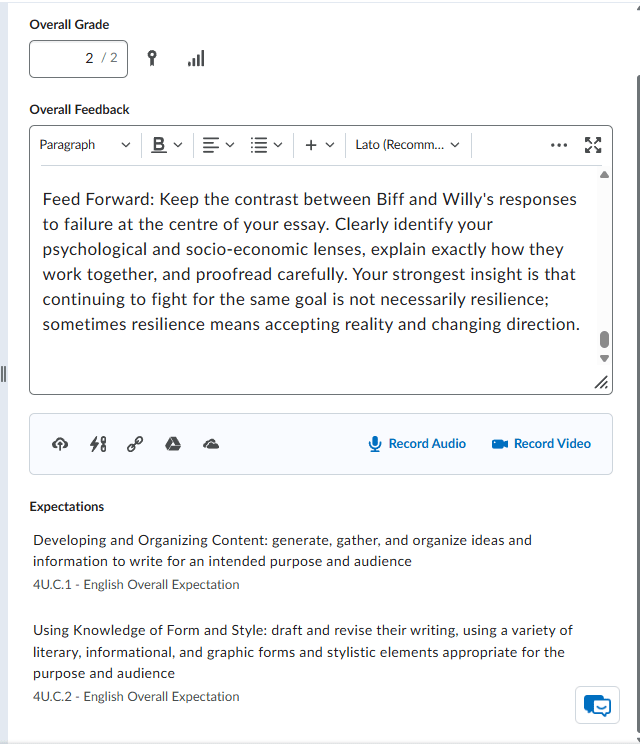
My goal is for assessment to become part of the learning process rather than simply the final step in an assignment. Students are encouraged to use feedback to revise their thinking, strengthen their writing, and approach subsequent assignments with greater independence.
Revision as Learning
I view revision as an opportunity for students to demonstrate further learning rather than simply an opportunity to change a grade. I created a structured revision and resubmission process that requires students to engage with their original feedback, identify their areas for improvement, and explain the specific changes they intend to make.
Before revising, students are asked to reflect on their original assessment, identify the feedback they received, explain what they need to improve, and develop a plan for applying that feedback. This encourages students to take ownership of the revision process and understand why changes are necessary.
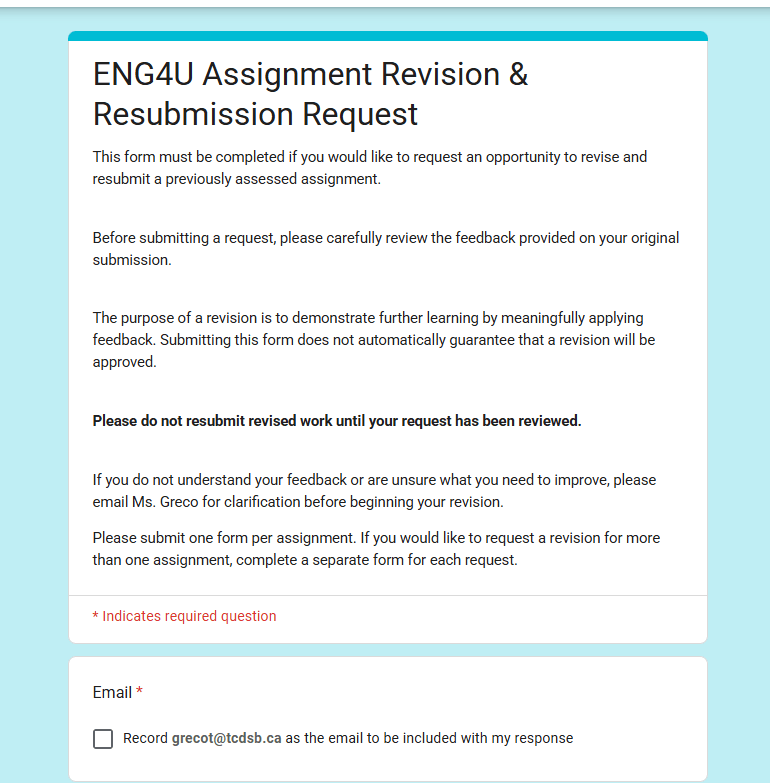
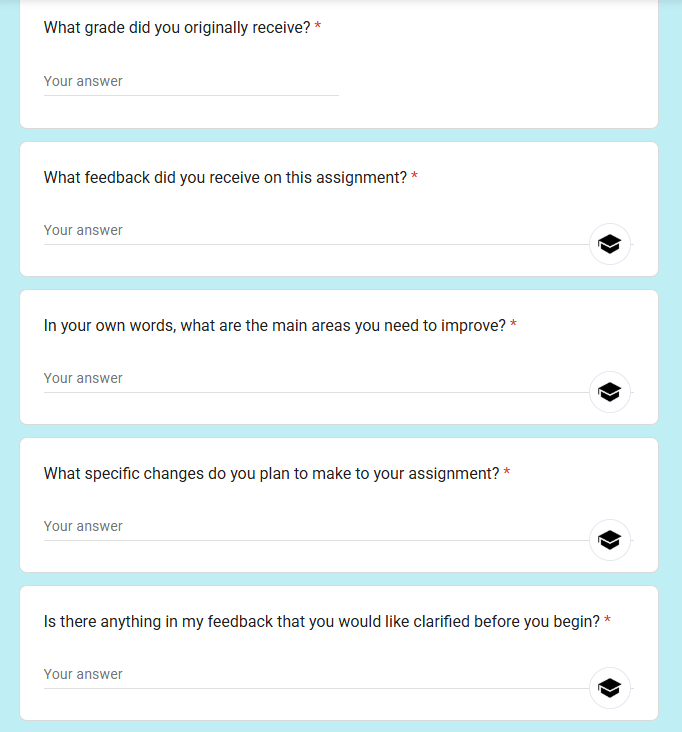
Revision is not automatic. Students must demonstrate that they have understood the original feedback and have a purposeful plan for improving their work.
From Assessment to Independence
My goal is for assessment to become part of the learning process rather than simply the final step in an assignment. Students are encouraged to use feedback to revise their thinking, strengthen their writing, and approach subsequent assignments with greater independence.
Good online teaching makes the classroom accessible without making learning impersonal. My goal is to create digital spaces where students know what to do, understand why it matters, feel supported when they need help, and gradually become more independent learners.
Keep Exploring
Curious about the educator behind the digital classroom? Explore more of my teaching journey and professional practice.

